85 Years On: Remembering the Spirit of the Rats of Tobruk
April 10, 2026
April 10th, 2026, marks the 85th anniversary of the Siege of Tobruk, Australia’s first major battle of the Second World War.
Today we reflect on not only a historic battle of the Second World War, but the character of Australian soldiers who endured it.
Looking back, Tobruk stands as a testament to the resilience and courage that defined those soldiers who came to be known as the “Rats of Tobruk.”
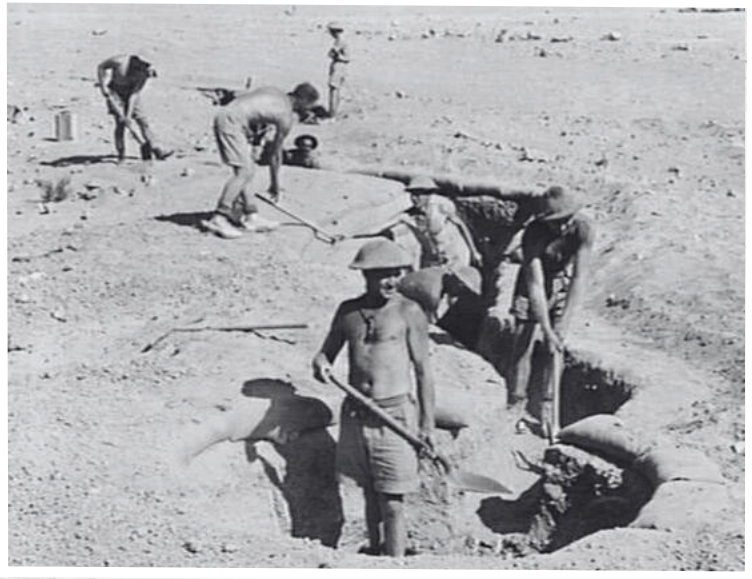
From April to December 1941, Australian soldiers endured a relentless siege from a German-Italian army commanded by General Erwin Rommel. The ordeal was marked by constant artillery fire, aerial bombardment, and the unyielding desert climate. Located in eastern Libya, near the Egyptian border, the conditions at Tobruk were harsh with dusty air, unbearable heat, and limited supplies. Yet it was in these extreme circumstances that the spirit of the Australian soldiers became most apparent.
The Australian soldiers at Tobruk were surrounded by German and Italian forces, and they endured tank attacks, artillery barrages, and daily bombings for eight long months. Rather than succumbing to despair, they adapted, often with humour. This was perhaps best captured in their response to enemy propaganda. German broadcaster Lord Haw-Haw mocked the trapped garrison as “rats in a trap.” Instead of taking offence, the Australians embraced the label.
The name “Rats of Tobruk” was adopted with pride, transforming an insult into a badge of honour. It reflected not only their refusal to be demoralised, but also a uniquely Australian tendency to meet hardship with wit and tenacity.
Eighty-five years on, the perseverance and mateship exhibited at Tobruk, as well as the soldiers’ deep commitment to caring for one another, live on in the work of Melbourne Legacy.
Just as the Rats of Tobruk stood by each other under relentless pressure, Melbourne Legacy carries that same spirit forward, supporting the families of veterans with compassion and dedication.
Reflecting on the Siege of Tobruk reminds us that it was more than a battle; it was a powerful demonstration of how community can be forged in the most challenging circumstances, and a lasting reminder that, above all, we must look out for one another.
Share page