A History of Remembrance in Australia
October 30, 2025
Every year on 11 November, Australians (and countless places around the world) pause for a minute of silence to remember those who served and sacrificed their lives in service to our country. This tradition, known as Remembrance Day, is one of the most solemn and significant moments in our national calendar.
But beyond the ceremonies, wreaths, and poppies, Remembrance Day carries a deeper meaning: a commitment to honour the past by supporting those deeply affected by service: not only veterans, but their families.
This commitment sits at the heart of Melbourne Legacy’s mission, dating back more than 100 years.
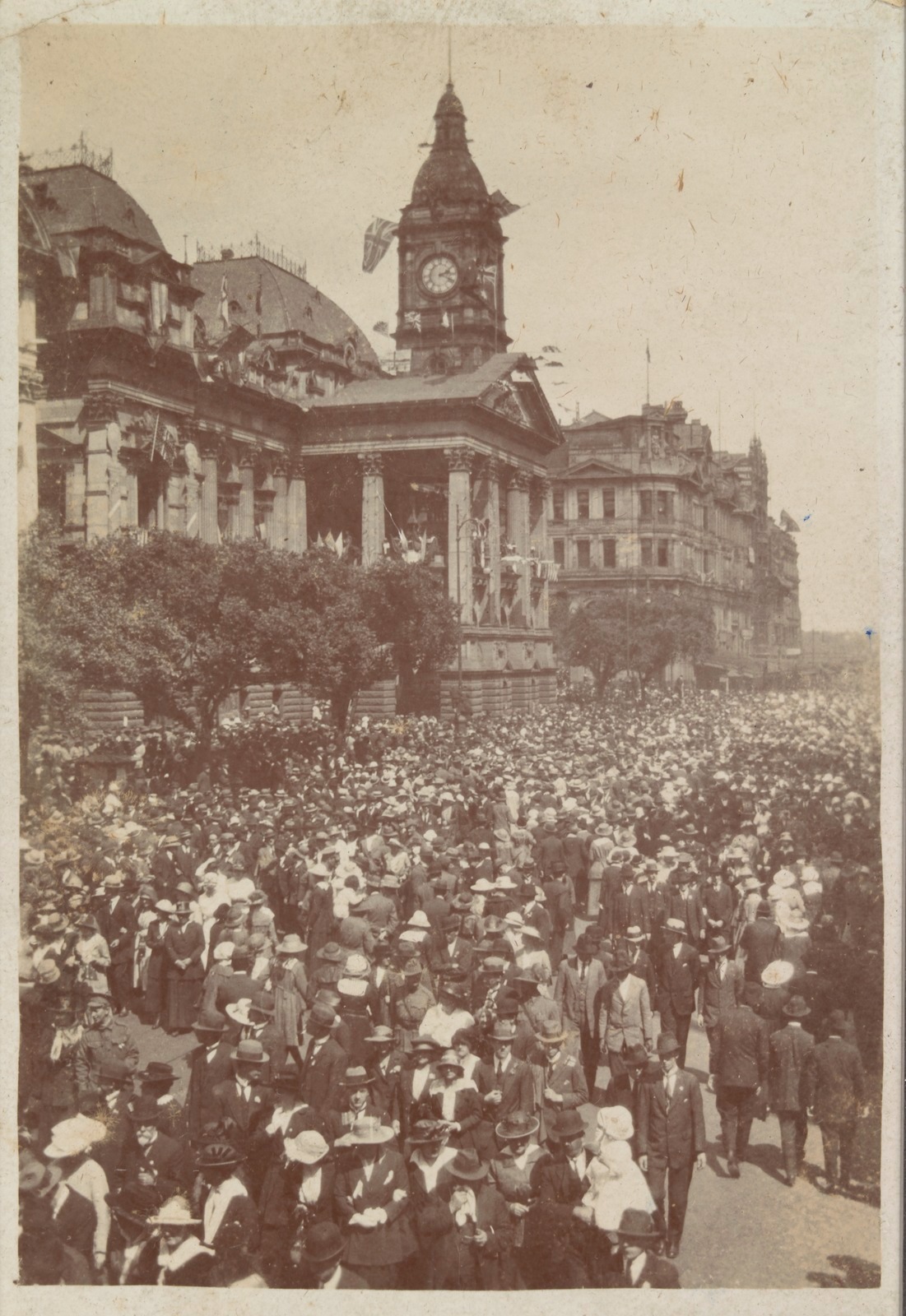
Armistice Day celebrations, 1918 in Swanston Street. Courtesy of State Library of Victoria.
Where Remembrance Day began
Remembrance Day traces its origins to the end of the First World War. At 11am on 11 November 1918, the guns on the Western Front fell silent, marking the armistice between Allied forces and Germany.
The following year, the first anniversary of this moment was observed as Armistice Day - a time to reflect on the immense loss of life and the courage of those who served.
In the decades that followed, the name changed to Remembrance Day, to honour all who have served, not only those from the First World War.
Today, Australians observe Remembrance Day with ceremonial services, the recitation of the Ode, the laying of poppies, the wearing of rosemary and a national pause for reflection at the 11th hour, of the 11th day of the 11th month.
Remembrance in Australia today
Remembrance Day has grown beyond a moment of silence, and has become a national tradition rooted in gratitude and reflection. At ceremonies across the country each year, people of all ages stand together to honour veterans who lost their lives and their families. Schools, workplaces, civic organisations, sporting clubs, and Returned & Services League (RSL) branches join in remembrance.
The red poppy remains a powerful symbol of service and sacrifice and has been proudly adopted by our friends at RSL for their Poppy Appeal. Increasingly, families and communities are also adopting the rosemary sprig, a uniquely Australian sign of remembrance that grows wild on the Gallipoli peninsula.
Remembrance is not just about history, it is about our ongoing commitment to honouring and supporting those who continue to carry the legacy of service today.
Legacy and Remembrance
Remembrance Day is deeply intertwined with Melbourne Legacy’s story.
Following the First World War, a distinguished group of ex-servicemen in Melbourne pledged to care for the widows and children of their fallen comrades. They called this "the promise", a guiding principle that Legacy continues to uphold more than 100 years later.
That promise of remembrance through care continues today.
While Remembrance Day honours those who served, Melbourne Legacy works every day to support the families who live with the impact of that service. From education support and financial counselling to social connection and community programs, Legacy ensures no family of a veteran faces hardship alone. Because family wellbeing is veteran wellbeing, and remembrance is not complete unless those families are supported.
Keeping the spirit of commemoration alive
When the bugle fades, the poppies wilt and the uniforms are folded away for another year, remembrance and commemoration must continue - in classrooms, in homes, in community halls, and through the support that families receive long after service ends.
Every act of remembrance matters. Wearing a poppy or sprig of rosemary. Attending a local service. Sharing a story. Supporting an organisation like Melbourne Legacy. Or just deliberately stopping for a moment to think of and remember those who have lost their lives and health through service to our country.
Because remembrance is not just about the past, it is about how we honour those legacies in the present. And at Melbourne Legacy, we honour them by caring for the families they leave behind.
You can help keel the spirit of remembrance alive by supporting Melbourne Legacy's work with veteran families.
Share page