The History of Legacy Week
August 17, 2026
When a group of returned servicemen founded Melbourne Legacy in 1923, they made a powerful promise — to support the families left behind by those who served.
For many years, this promise was upheld through personal networks and deep commitment. As founding figure Lieutenant General Sir Stanley Savige famously said: “If a job is worthwhile doing, the money will come.”
For decades, Legacy operated without public fundraising. But after the Second World War, with the number of widows and children needing support growing rapidly, it became clear that help from the wider community was essential.
It was then that Legacy launched its first public fundraising campaign, centred on the simple yet meaningful act of selling a badge.
Originally known as the War Orphans Appeal, this campaign evolved into Legacy Week, held annually around Father’s Day to honour the children growing up without theirs. Legatees, widows and volunteers would take to the streets with trays and wallets full of badges, selling them to raise funds and awareness. These small tokens became symbols of care and solidarity, proudly worn by Australians wanting to show their support.
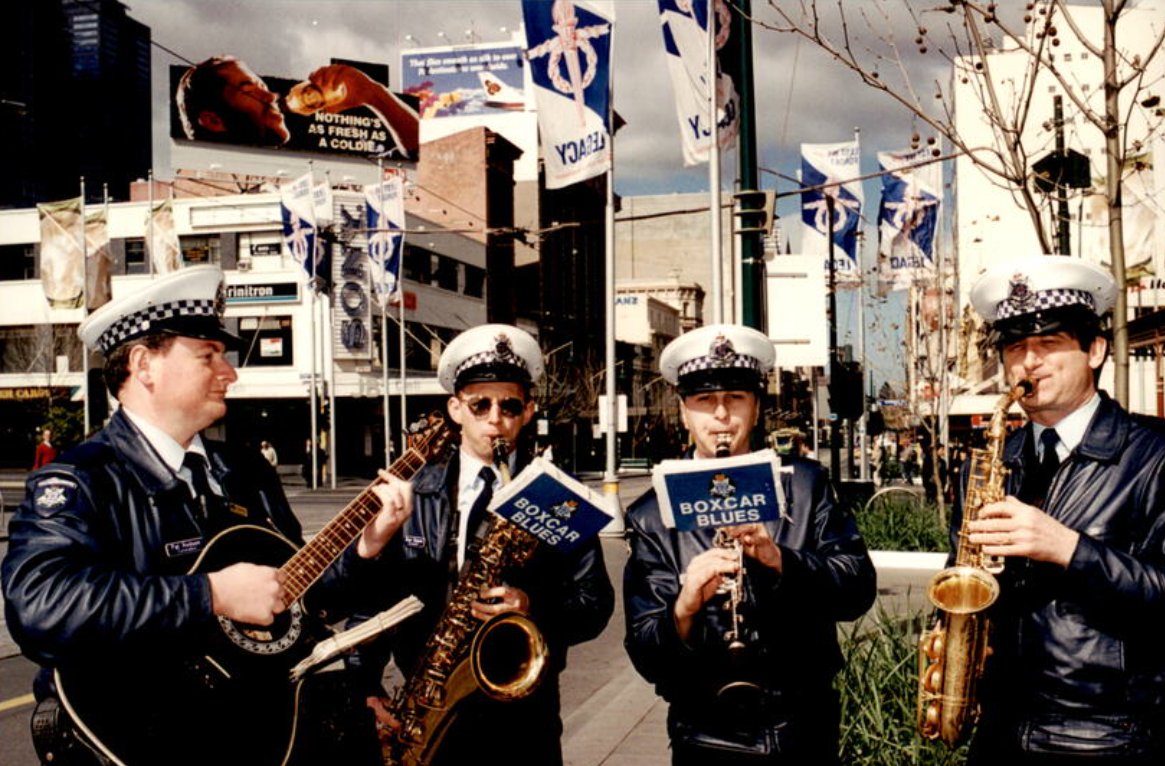
Four members from the police band playing in Swanston Street as part of Legacy Week fundraising in 1995.
Some of the earliest badges were crafted in 9ct gold, and over the years the many variations of the Legacy Torch Badge have become somewhat of a collector’s item. More than that, it is a visible sign of commitment to remembering service and supporting the families of veterans.
Legacy Week has grown into a nationwide tradition, with support from public figures, advocates and even royalty. At the Legacy Week Jubilee in 1973, His Royal Highness Prince Philip, The Duke of Edinburgh, remarked: “Since I heard of Legacy, my respect has turned to unbounded admiration. Here is a practical, living expression of comradeship and remembrance.”
Legacy Week is more than a fundraiser, it’s a moment of reflection and community that spotlights the unique experiences of families of veterans that lost their loved one, or their loved one’s help through service.
Legacy Week began as a time to show community care for children who had lost a parent in war. Today, that same care reaches children whose lives have been shaped by a parent's service.
As more veteran families become eligible for support, demand for our services continues to grow.
More children will need someone to turn to. Together this Legacy Week, we can ensure they have opportunities to thrive, build confidence, discover their strengths, stay connected to school and community, and grow into capable young adults.
Every badge sold helps keep our promise alive.
Share page